You know what’s wild? The generation that grew up with Instagram filters and TikTok dances is now… ditching their smartphones. Yeah, you read that right. Gen Z—the same folks who can’t remember life before Wi-Fi—are trading in their iPhones for basic flip phones that can barely send a text without autocorrect having a meltdown.
And before you ask: no, this isn’t some quirky hipster phase. The numbers are actually pretty mind-blowing.
The Stats That’ll Make You Do a Double-Take
Let’s talk facts for a second. According to the latest 2026 research, 28% of Gen Z adults say they’re interested in getting a dumb phone. That’s almost three times higher than Baby Boomers (who, ironically, you’d think would be the ones craving simpler tech).
But here’s the kicker: 16% of Gen Z already own one. We’re not talking about a handful of digital detox enthusiasts hiding in coffee shops. This is millions of young people actively choosing phones that can’t even download Spotify.
Since the pandemic hit, dumb phone sales among 18-to-24-year-olds have absolutely exploded—we’re talking a 148% increase. And the global dumb phone market? It hit $10.6 billion in 2024, with search interest peaking in late 2025 during the holiday season.
So… What’s Actually Going On Here?
Remember when we all thought smartphones were the coolest thing since sliced bread? Well, Gen Z is living the reality of having those devices surgically attached to their hands, and they’re not loving it.
In Germany, 84% of consumers aged 18-24 admit they use their phones way too much. Over in the States, 24% of people under 30 straight-up say smartphones have wrecked their mental health.
And the screen time? Brutal. Gen Z is averaging 6 to 7 hours daily on their phones. That’s basically a full-time job of scrolling, swiping, and stressing about why your ex just posted a photo with someone new.
But here’s where it gets real: 76.3% of Gen Z report they spend more time on their phones than they want to. They know it’s a problem. They just can’t stop—until they literally remove the temptation by getting a phone that can’t scroll Instagram at 2 AM.
The “Analog 2026” Movement Is Actually a Thing
There’s this whole movement now called “Analog 2026” or “Digital Minimalism,” and it’s not just about phones. It’s about reclaiming your brain from algorithms that are literally designed to make you addicted.
Think about it: when was the last time you picked up your phone “just to check the time” and then somehow ended up watching a 20-minute video about conspiracy theories involving pigeons? (Just me? Cool.)
Gen Z grew up being told smartphones were essential. But now they’re realizing that maybe—just maybe—they don’t need 47 apps competing for their attention every second of every day.
The Real Reasons They’re Making the Switch to Dumb Phones
Mental Health Isn’t a Joke Anymore
Here’s something nobody talks about enough: constant notifications literally mess with your nervous system. One study mentioned that after ditching smartphones, most users experience phantom vibrations for about 48 hours, followed by significant relief. Your body stops being on high alert 24/7 waiting for the next ping.
Young people are dealing with anxiety, depression, and sleep issues at rates we’ve never seen before. And while smartphones aren’t the only cause, they’re definitely not helping when you’re doomscrolling news about climate change at midnight.
The Nostalgia Factor Hits Different
There’s this weird thing happening where Gen Z is nostalgic for an era they didn’t even fully experience. It’s called “anemoia”—nostalgia for a time period you never lived through. And honestly? It makes sense.
They’ve heard stories about the “good old days” when people actually talked to each other at dinner instead of being glued to screens. When plans were made and kept because you couldn’t just ghost someone with a text. When your value wasn’t determined by how many likes your vacation photo got.
Flip phones represent that simpler time. Plus, let’s be honest—bedazzling a hot pink Motorola Razr is objectively cooler than putting another boring case on your iPhone.
Privacy and Security Actually Matter
Here’s something people don’t think about: smartphones are basically data-harvesting machines. Every app you download wants access to your contacts, location, photos, and probably your firstborn child.
In 2023, it came out that governments were requesting push notification data from Apple and Google to track users. Dumb phones? They don’t have push notifications. Can’t track what doesn’t exist.
For a generation that’s grown up with data breaches and privacy scandals as background noise, the appeal of a phone that can’t spy on you is pretty strong.
The Price Tag Doesn’t Hurt Either
Let’s talk money for a second. The average smartphone costs around $455 globally, and in the US? That number jumps to $984. Plus data plans, insurance, and the inevitable cracked screen repair.
Dumb phones? You can snag one for $20-$50 with a prepaid plan, or $50-$100 unlocked. For Gen Z—who are dealing with student loans, rising rent, and an economy that’s not exactly rolling out the welcome mat—that price difference matters.
What the Market Data Is Showing
The interesting thing about this trend is that it’s not just talk. The money backs it up.
Search interest for basic phone models peaked at 63 in December 2025, showing serious consumer interest. And while some analysts are cautious about long-term growth, predictions suggest the dumb phone market could grow to 5% of the overall market within the next five years.
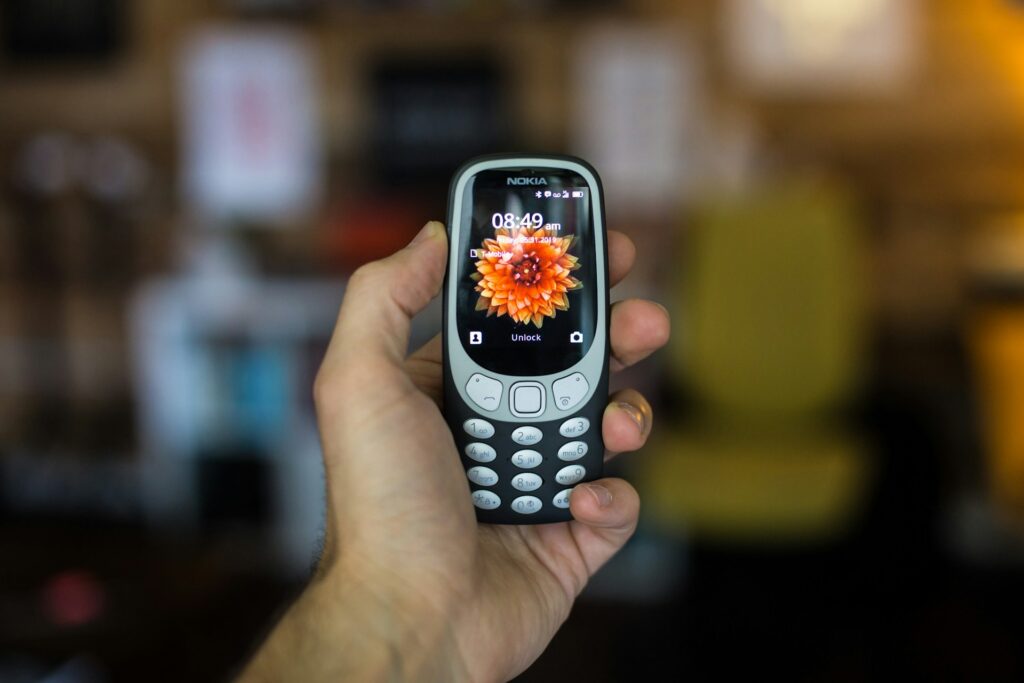
We’re also seeing established brands jump in. Nokia, which held over 90% of the feature phone market in 2022, introduced “repairable phones” in 2023 to keep devices in people’s hands longer.
New companies like Punkt, Light, and Keyphone are specifically targeting the digital minimalism crowd. The Light Phone, for example, markets itself not as a “dumb phone” but as an “intentional phone”—a premium device designed to do less, not more.
The Pushback Is Real
Obviously, not everyone is on board with this trend. Some critics point out that dumb phones might seem great in theory, but in practice, you’re cutting yourself off from essential modern conveniences.
Navigation apps? Gone. Mobile banking? Nope. That group chat where your friends actually make plans? Good luck keeping up.
And the market data reflects this hesitation. While interest is growing, the vast majority of every age group still isn’t interested in switching. Even among Gen Z, 72% aren’t looking to trade down.
Plus, there’s the question of whether this is a sustainable movement or just a fleeting trend. Feature phone sales show mixed signals—some analysts predict growth, while others (like Statista) forecast sales falling to 2.1 million units annually by 2028.
It’s Not All-or-Nothing
Here’s something interesting: not everyone who’s into this trend is actually buying a new phone. A lot of Gen Z users are turning their smartphones into “dumb phones” using apps and settings.
You can block apps during certain hours, turn off all notifications, switch to grayscale mode to make your screen less appealing, or use extreme focus modes that only allow calls and texts.
There are entire subreddits (r/dumbphones has a massive community) dedicated to helping people either find the right basic phone or modify their existing smartphone to be less addictive.
Some people go full minimalist during the workweek, then bring back their smartphone features on weekends. Others keep a dumb phone for daily use and an old smartphone on Wi-Fi at home for things like maps and music.
The point isn’t necessarily to reject technology completely—it’s about choosing when and how you engage with it.
What This Means for the Future
The dumb phone trend is part of a bigger conversation about our relationship with technology. It’s not just Gen Z asking these questions—it’s everyone who’s ever felt that tiny panic when their phone battery hits 10%, or who’s caught themselves checking social media without even meaning to.
Companies are starting to pay attention. You’re seeing more “digital wellness” features built into smartphones, more discussion about ethical design, and growing pushback against the attention economy that makes money by keeping us hooked.
Whether dumb phones become a major market force or stay a niche movement, the underlying message is clear: people are tired of being controlled by their devices. They want technology that serves them, not the other way around.
For Gen Z specifically, this trend represents something bigger than just a cool retro aesthetic. It’s about taking control in a world that constantly demands their attention, their data, and their mental energy.
The Bottom Line
Are dumb phones going to replace smartphones entirely? Probably not. Americans check their phones 144 times per day on average, and that level of integration isn’t going anywhere fast.
But the fact that 28% of Gen Z is interested in making the switch—and that sales have jumped 148% among young adults—tells us something important. The generation that was supposed to be the most tech-dependent is saying “actually, maybe not.”
They’re choosing battery life over battery anxiety. Real conversations over Instagram comments. Being present over being perpetually online.
And honestly? In a world where the average person spends 4 hours and 30 minutes daily on their phone (with Gen Z clocking in even higher), maybe a little less “smart” isn’t such a dumb idea after all.
Frequently Asked Questions (FAQs)
The data suggests it’s more than a passing trend. Since 2020, searches for “dumb phone” have steadily increased, with a significant spike in late 2025. The market hit $10.6 billion in 2024, and sales among 18-24 year-olds jumped 148% since the pandemic. While it likely won’t overtake smartphones, the consistent growth and underlying mental health concerns suggest this movement has staying power. Think of it less as a fad and more as a growing counterculture to smartphone dominance.
It depends on the model, but most modern dumb phones can handle: calls and texts (obviously), basic cameras for photos, alarms and timers, simple calendar functions, FM radio, and sometimes basic GPS or maps. Some models offer limited internet browsing, though it’s intentionally clunky to discourage overuse. The whole point is to strip away the addictive features while keeping essential communication tools.
Yes! Most modern feature phones support 4G connectivity, and many now include eSIM and NFC capabilities. Major carriers like AT&T, Verizon, and T-Mobile all support basic phones. You can typically get no-data plans for $20-$50 monthly, which is significantly cheaper than standard smartphone plans. Some dumb phones even run KaiOS, which allows limited app functionality like WhatsApp without the full smartphone experience.
The savings are substantial. While the average smartphone costs $455 globally ($984 in the US), dumb phones typically run $20-$100. Data plans for smartphones average $50-$100 monthly, while no-data plans for basic phones can be $10-$30. Over two years, you could save $1,500-$2,500 depending on your current setup. Plus, dumb phones rarely crack when dropped and have battery life measured in days, not hours, so replacement and charging costs are minimal.
This is the biggest concern people have, and it’s valid. Most dumb phone users either keep an old smartphone on Wi-Fi at home for these tasks, use a computer for banking, or adopt workarounds (like printing directions before trips, using physical cards instead of mobile pay). Some people also use a hybrid approach—dumb phone during the week, smartphone on weekends. It requires more planning, which is actually part of the appeal for many users.
Yes, surprisingly. While 28% of Gen Z is interested in dumb phones, only 13% of Gen X and 9% of Baby Boomers feel the same way. This is ironic since older generations are less tech-native, but it makes sense—Gen Z has actually lived the reality of smartphone addiction and social media burnout their entire adolescence. They’re the first generation to grow up with this technology and the first to consciously push back against it.
No, it’s global. Germany reports 84% of 18-24 year-olds feel they use phones too much. The UK shows 35% of adults actively reducing screen time. Search trends show increased interest across North America, Europe, and parts of Asia. However, the motivations vary—in wealthier countries, it’s driven by digital wellness and mental health, while in other regions, it’s more about affordability and simplicity.
This is a legit challenge. Most dumb phone users either check their old smartphone periodically on Wi-Fi, coordinate with friends to use regular texts instead of apps like WhatsApp or Messenger, ask one trusted friend to keep them in the loop, or embrace the idea that they might miss some spontaneous plans—which many see as a feature, not a bug. The key is setting expectations with your social circle.
Popular models include: Nokia flip phones and feature phones, the Light Phone 2 (minimal “intentional” phone), Punkt MP02 (Swiss-designed minimalist phone), various Motorola Razr-style flips, and basic phones from brands like Alcatel and TCL. Many Gen Z users also seek out vintage phones from the 2000s for the authentic nostalgia factor. TikTok hashtag #BringBackFlipPhones has over 59.8 million views, with users showing off customized and bedazzled devices.
It depends on your field. Some industries require constant connectivity and app access, making a dumb phone impractical. However, many Gen Z professionals use a hybrid approach: dumb phone for personal use, work smartphone that stays at the office. Others have found that being less available actually improves their work-life balance and makes them more focused during work hours. The trend reflects broader workplace conversations about boundaries and digital wellness.